Large Diameter Foundation Drilling for Structural Performance
Caisson & Drilled Shaft Construction
When structural loads are high and foundation integrity is critical, precision matters. O’Keefe Drilling provides large diameter caisson and drilled shaft construction services across Montana and the western United States, supporting commercial, infrastructure, and specialty structural projects with controlled, reliable execution.
Include structural drawings, diameter specifications, depth targets, and site constraints for a scoped proposal.
STRUCTURAL FOUNDATION SYSTEMS
Built for Structural Foundations
Caisson and drilled shaft construction creates deep, load-bearing foundation elements designed to transfer structural loads to competent bearing strata.
Our services commonly support:
- Commercial building foundations
- Elevator shafts
- Retaining wall systems
- Cell tower and telecommunications foundations
- Bridge and infrastructure supports
- Heavy structural pier installations
Large diameter shafts require disciplined borehole control, plumbness, and alignment to meet structural tolerances.
DRILLING CAPABILITIES
Caisson & Drilled Shaft Capabilities
Our caisson drill rig is engineered for controlled, large diameter foundation excavation.
- Diameter Range: 12 inches up to 6 feet
- Depth Capacity: Up to approximately 50 feet (project-dependent)
We maintain tight tolerance on bits and stabilizers to ensure plumbness and shaft alignment within project specifications. Accurate borehole construction is critical for reinforcement cage placement and long-term structural performance.
Our systems are capable of drilling through:
- Solid bedrock
- Alluvial overburden
- Mixed or variable subsurface conditions
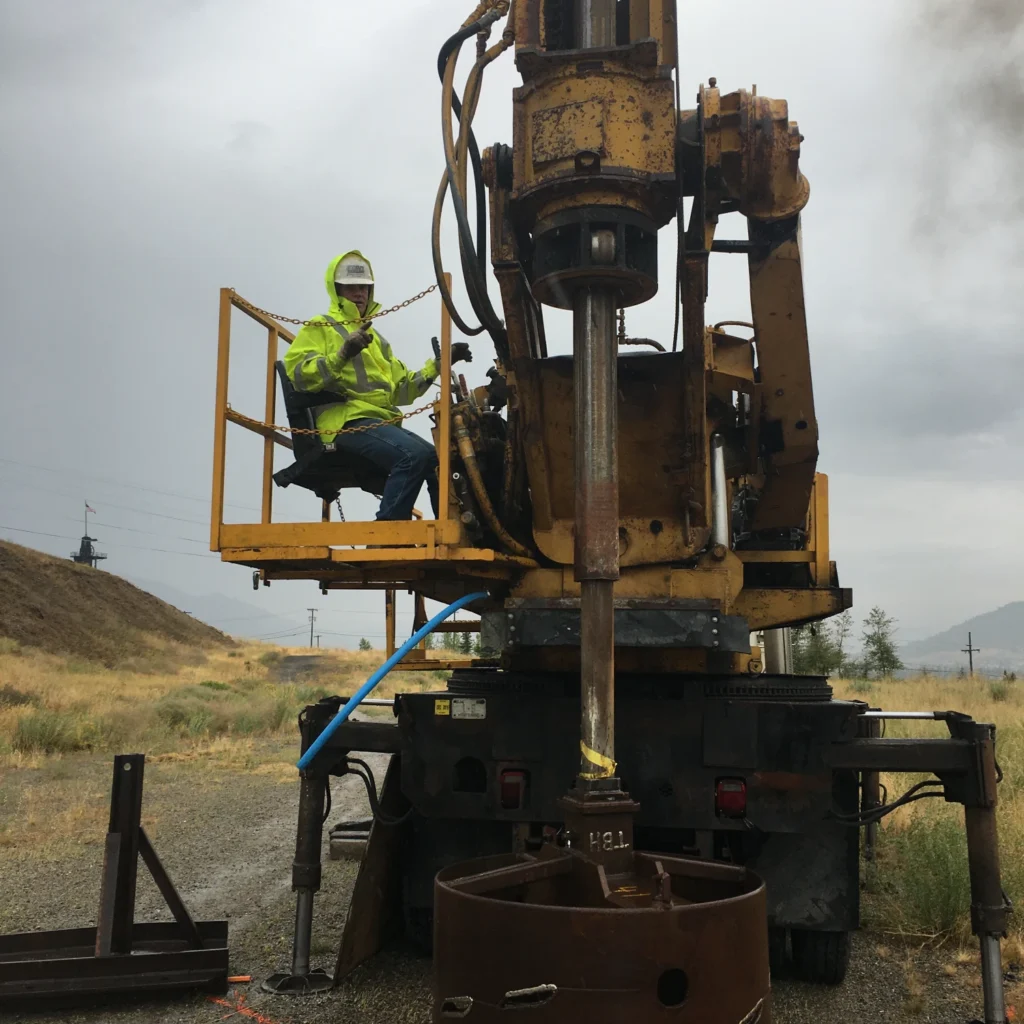
Method selection is aligned with geotechnical data and structural load requirements.
STRUCTURAL COORDINATION
Structural Coordination & Reinforcement Support
Drilled shaft construction requires coordination beyond excavation.
We support projects that require:
- Reinforcement cage placement within specified tolerances
- Controlled borehole diameter and alignment
- Stable shaft conditions prior to concrete placement
- Adaptability to changing geotechnical conditions
Precise drilling reduces the risk of shaft deviation, construction delays, and costly structural adjustments.
RESTRICTED ACCESS SOLUTIONS
Indoor & Restricted Access Foundation Work
Some projects require large diameter shaft construction in confined or interior environments.
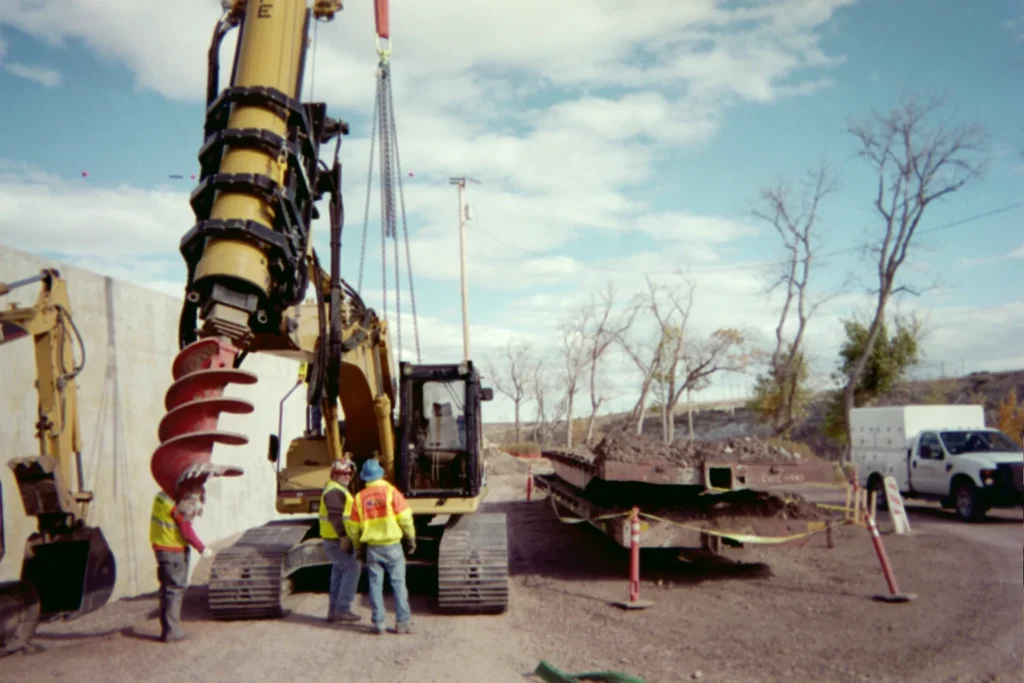
O’Keefe Drilling operates an indoor elevator drill capable of passing through standard doorways, hallways, and interior corridors. Once positioned, the system can drill through bedrock or overburden while maintaining required alignment and structural tolerances.
This capability supports:
- Interior elevator shaft installations
- Retrofit and renovation projects
- Urban construction sites with limited staging
- Low-clearance environments
DIFFICULT ACCESS DRILLING
LoDril® – Difficult Access Drilled Shaft Construction
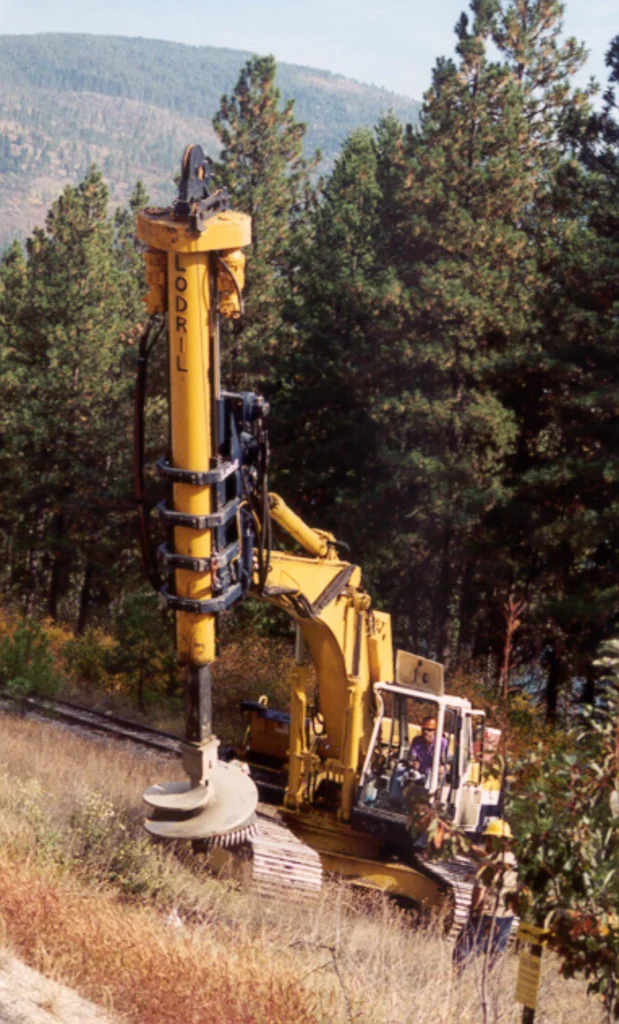
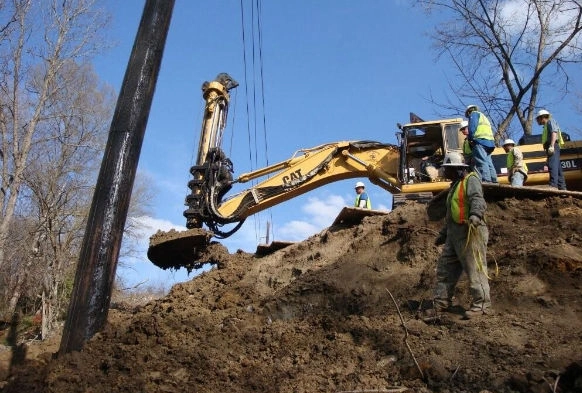
The LoDril system provides specialized capability for difficult access foundation projects. As an excavator-based attachment, the LoDril operates where traditional mast-mounted rigs cannot.

Slopes & Uneven Terrain
The LoDril can drill on:
- Slopes
- Muddy or unstable ground
- Uneven or restricted terrain
This flexibility reduces the need for extensive site modification or crane-supported systems.
Low Headroom Environments
With a low profile and telescoping kelly bars, the LoDril drills in areas where overhead restrictions prevent use of high-mast equipment.
Ideal for:
- Under power lines
- Beneath bridges
- Under structural overhangs
- Inside existing buildings

360° Reach Capability
The LoDril operates within a full 360-degree radius and can reach over obstructions such as:
- Retaining walls
- Barriers
- Casing
- Trenches
It can effectively reach up to 18 feet (5.5 meters) beyond the tracks, placing drilling power exactly where structural plans require it.
PRECISION & RISK CONTROL
Precision & Structural Risk Management
Large diameter foundation construction is not simply excavation. It is structural risk management.
Accurate caisson and drilled shaft work helps:
- Maintain plumbness and alignment tolerances
- Protect reinforcement cage placement
- Reduce the risk of structural deviation
- Ensure proper load transfer to competent bearing strata
- Minimize costly rework and schedule disruption
Our crews execute foundation drilling with full awareness of its structural importance.
WHO WE SUPPORT
Who This Service Is Designed For
Our caisson and drilled shaft construction services support:
- Structural engineering firms
- Civil engineering firms
- Commercial and industrial developers
- Infrastructure and bridge contractors
- Utility and telecommunications contractors
We integrate directly into construction schedules where safety, access, and structural tolerances are critical.
Frequently Asked Questions
What is the difference between caisson and drilled shaft construction?
Both refer to large diameter foundation shafts used to create deep, load-bearing structural elements. Terminology varies by region and project type.
What diameters and depths can you construct?
We construct shafts ranging from 12 inches to 6 feet in diameter, with depths up to approximately 50 feet depending on project conditions.
Can you construct shafts in bedrock?
Yes. Our equipment is capable of drilling through solid bedrock as well as overburden and mixed formations.
How do you maintain alignment and plumbness?
We use stabilized tooling and controlled drilling practices to maintain shaft alignment and vertical tolerance in accordance with project specifications.
Can you operate in restricted access environments?
Yes. Our indoor elevator drill and LoDril system are designed for low-clearance, slope, and difficult-access foundation projects.
O'Keefe Drilling
Related Services
Geotechnical Drilling
Environmental Drilling & Sampling
Water Well Drilling
Request a quote
Planning a Caisson or Drilled Shaft Project?
If your project requires large diameter foundation construction or difficult access solutions, we are ready to review your scope and provide a detailed bid.
Share structural drawings, diameter requirements, depth targets, and access constraints to begin the proposal process.